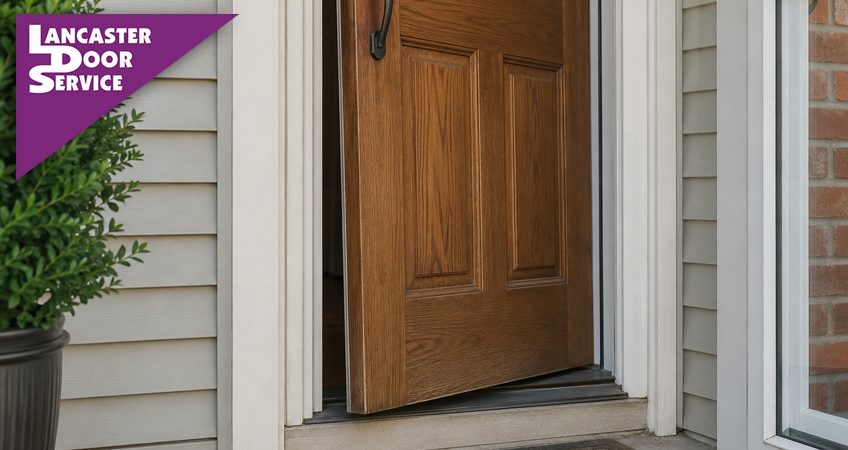
If your front door has started scraping the frame, or your storm door won’t latch the way it used to, you’re not imagining it. Lancaster County’s humid summers and damp shoulder seasons are hard on doors, and entry and storm doors take the brunt of it. Here’s what’s actually going on, and how to fix it before it turns into a bigger repair.
Quick answer: Entry and storm doors typically stick because wood and vinyl absorb humidity and swell, causing the door to bind against the frame. That same swelling puts extra stress on hinges, which can loosen and cause the door to sag or sit out of alignment. Both issues are usually seasonal and often fixable with basic maintenance, though a professional inspection is worth it if the problem doesn’t improve once the weather changes.
Why Do Entry Doors Stick? (Humidity and Swelling Explained)
Wood is a natural material, which means it reacts to moisture in the air. Solid wood doors, and to a lesser extent some vinyl doors, absorb humidity and expand slightly. That swelling is usually small, but a door only needs to grow a fraction of an inch to start scraping against the frame or refusing to latch cleanly.
This is why sticking doors tend to show up seasonally. A door that closes fine in the spring can bind by mid-summer once humidity levels climb, then loosen back up again as the air dries out in fall and winter. If the sticking comes and goes with the weather, humidity is almost always the cause.
A few common signs to watch for:
- The door drags along the floor or frame when opening or closing
- It takes extra force to latch, or the latch doesn’t catch cleanly
- Gaps around the door look uneven from top to bottom
- The problem is worse in summer and improves in cooler months
Why Does Storm Door Hardware Sag or Loosen?
Swelling doesn’t just affect the door itself. It puts extra strain on the hardware holding it in place. As a wood or vinyl door expands, it gets heavier and shifts slightly in the frame. Over time, that added stress works the hinge screws loose, especially if they’re driven into softened or worn wood.
Once a hinge loosens, the door drops slightly on that side. That small shift is usually what causes the misalignment homeowners notice first: a door that used to close smoothly now catches on one corner, or a storm door that won’t sit flush against its frame. Left alone, loose hinges tend to get looser, since a loose door puts uneven weight on the remaining screws.
Storm doors are especially prone to this because they’re lighter and mounted with fewer, smaller hinges than a solid entry door. A storm door that sags is often just a matter of tightening or replacing the hinge screws, but if the wood behind the hinge has worn out from repeated stress, the screws won’t hold no matter how many times they’re tightened back in.
How Do You Fix a Sticking or Loose Door?
Most minor sticking and hardware issues are manageable without a full door replacement:
- Tighten hardware regularly. Loose hinge screws are one of the most common causes of a sagging or misaligned door, and checking them once or twice a year can catch the problem early.
- Keep indoor humidity in a moderate range. Doors that stay in a stable humidity environment swell and contract less dramatically, which puts less stress on both the wood and the hardware.
- Don’t over-correct a humid door. Sanding or planing down a door that’s swollen with summer humidity can leave it too loose once the air dries out. Minor adjustments are usually enough.
- Address drainage near entryways. Water pooling near a door threshold adds to the moisture the door is already absorbing from the air, so keeping gutters and grading clear of the entry helps reduce swelling over time.
- Know when it’s more than the season. If a door sticks year-round, or the frame itself looks warped or uneven, the issue is likely structural rather than seasonal, and it’s worth having a professional take a look.
Frequently Asked Questions
Why does my front door only stick in the summer? Humidity is highest in summer, so wood and vinyl doors absorb more moisture and expand. The same door usually operates normally again once cooler, drier air returns in fall.
Can I fix a loose storm door myself? Often, yes. Tightening or replacing loose hinge screws resolves most minor sagging. If the wood behind the hinge has worn out and won’t hold a screw, or the door still won’t sit flush after tightening, it’s time to call a professional.
Should I sand down a door that’s sticking from humidity? Not right away. A door that’s swollen from summer humidity will likely shrink back once the air dries out. Sanding it down to fit can leave it loose and drafty in the winter. Minor adjustments are safer than a full sanding in most cases.
How often should I check my entry or storm door hardware? Once or twice a year is enough for most homes, ideally at the start of summer and again in fall, when humidity swings are the most noticeable.
When should I call a professional instead of fixing it myself? If a door sticks year-round regardless of the season, or the frame itself looks warped, uneven, or damaged, the cause is likely structural rather than seasonal. That’s a good time to have a professional evaluate it.
Get Help From Lancaster Door Service
Seasonal sticking is common and often self-correcting, but loose hardware, warped frames, and doors that no longer close securely are worth addressing sooner rather than later, both for your home’s energy efficiency and its security. If your entry or storm door isn’t operating the way it should, and you think it’s more than seasonal humidity causing problems, contact Lancaster Door Service today to schedule a free estimate for a replacement