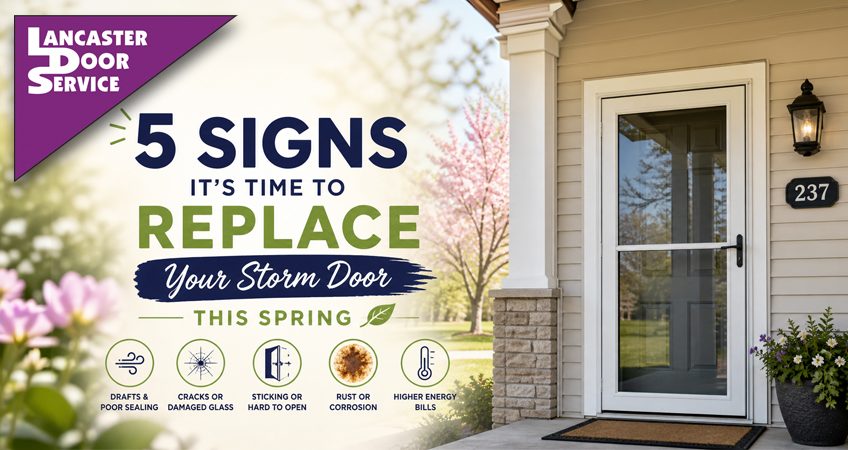
Spring is the season for fresh starts, cleaning out the garage, tidying up the yard, and taking a closer look at the parts of your home that weathered after another long winter. Your storm door is one of those things that’s easy to overlook, but after months of cold temperatures, ice, and wind, it may be showing signs of wear that go beyond a simple fix.
A storm door that’s past its prime isn’t just an eyesore. It can affect your home’s energy efficiency, security, and everyday comfort. Before the warmer months are in full swing, it’s worth taking a few minutes to inspect your door and ask the question: is it time for a replacement?
Here are five signs that the answer might be yes.
Sign #1: Visible Damage to the Frame or Glass
What to Look For
The most obvious sign that your storm door needs to be replaced is physical damage you can see with your own eyes. Winter is tough on exterior doors: freezing temperatures cause materials to contract, ice can put pressure on frames, and moisture finds its way into places it shouldn’t.
- Cracks, warping, or bending in the frame: Even small cracks in the frame can grow over time and compromise the door’s structural integrity. A warped or bent frame means the door no longer sits properly in its opening, which creates gaps that let in air, water, and insects.
- Cracked, fogged, or broken glass panels: Fogging between double-pane glass is a sign that the seal has failed and the insulating layer is gone. Cracked or broken glass is both a safety concern and a security issue.
- Paint peeling or rust forming on metal components: Surface rust might seem cosmetic at first, but left untreated it spreads quickly and weakens the door’s structure from the outside in.
When damage goes beyond a simple fix, it’s usually a signal that the door has run its course.
Sign #2: Drafts, Leaks, or Poor Insulation
How to Test Your Door’s Seal
One of the jobs of a storm door is to act as an extra layer of protection between your home and the elements. It can also help limit drafts, especially if your main entry door isn’t perfectly sealed. If the storm door isn’t closing tightly, you may notice more outside air or moisture getting in.
- Run your hand along the edges to feel for air movement:
On a breezy day, slowly move your hand around the perimeter of the closed door. Any noticeable air movement may indicate gaps in the seal. - Check the weatherstripping for wear, gaps, or compression loss:
Weatherstripping that is cracked, flattened, or pulling away from the frame can allow air and moisture to pass through.
A storm door that allows air or moisture through isn’t providing the level of protection it was designed for. While the impact on energy use is usually modest, maintaining a good seal helps improve comfort and protects your main entry door from the elements.
Sign #3: Hardware That’s Failing or Worn Out
The Small Parts That Make a Big Difference
A storm door is only as reliable as its hardware. Handles, hinges, closers, and latches all take a beating over the years, and when they start to go, it affects everything from daily convenience to the security of your home.
- Door closers that slam, stick, or don’t fully close: A door closer that’s lost its tension will either slam shut on its own or fail to pull the door closed at all. Both are problems; one is a safety concern, the other leaves your home exposed.
- Handles, locks, or latches that are loose or no longer function properly: Hardware that wiggles, sticks, or refuses to latch correctly is more than an inconvenience. It’s a sign that the door can no longer be secured the way it should be.
- Hinges that have shifted, causing squeaking or uneven hanging: If the door visibly tilts or drags on one side, the hinges may have shifted or worn down to the point where the door can no longer hang correctly.
When multiple hardware components start failing at once, replacement is often more practical than ongoing repairs.
Sign #4: The Door No Longer Opens or Closes Properly
Alignment and Operation Issues to Watch For
A storm door should open and close smoothly, every single time. If yours has started to feel like a wrestling match, that’s not something to ignore. Operation issues are often a sign of deeper structural problems that only get worse with time.
- The door drags along the frame or threshold when opening: Dragging is usually caused by a frame that has shifted or a door that has warped enough to fall out of alignment. It puts unnecessary stress on the hinges and hardware every time the door is used.
- It doesn’t latch without forcing it shut: If you have to lift, push, or force the door into place just to get it to latch, the frame or door itself has moved out of square. That’s not a problem that goes away on its own.
- Seasonal temperature changes are causing the door to stick or gap: Some minor seasonal movement is normal, but if your door behaves dramatically differently in warm versus cold weather, the materials may have degraded to the point where they can no longer hold their shape.
A door that doesn’t operate smoothly is both a security concern and a daily frustration.
Sign #5: It Just Looks Outdated
Curb Appeal Matters More Than You Think
Not every reason to replace a storm door is about function. Sometimes a door has simply aged out, and that’s a completely valid reason to make a change. Your front entryway is one of the first things people notice about your home, and a tired, dated storm door can bring down the overall look of an otherwise well-maintained exterior.
- Faded, chipped, or discolored finishes that no longer match the home: Years of sun exposure, temperature swings, and general wear take a toll on finishes. A door that once matched your home’s exterior may now look dull, mismatched, or just plain worn out.
- A style that feels dated compared to the rest of the home’s exterior: Design trends change, and so do the options available to homeowners. If your storm door looks like it belongs to a different decade, it may be holding back the overall curb appeal of your home.
- Newer models offer better features, glass options, and energy performance: Beyond looks, today’s storm doors offer significantly improved glass technology, tighter seals, better hardware, and more customization options than doors from even ten or fifteen years ago.
Sometimes a storm door has simply aged out, and spring is the perfect time to give your entryway a fresh, updated look.
Still Not Sure? We’re Here to Help.
Knowing whether your storm door needs a repair or a full replacement isn’t always a straightforward call. If you’ve noticed one or more of these signs and aren’t sure what the right next step is, the team at Lancaster Door Service is happy to help. We’re always glad to answer questions and help homeowners make informed decisions about their doors; no pressure, just honest guidance from people who know doors inside and out. Feel free to reach out to us anytime.